

Ceramic coating is an exceptional option for refreshing older cars because it restores deep gloss to faded paint and provides a durable, semi-permanent protective layer. When applied to an older vehicle with a healthy, clear coat, it fills in microscopic surface imperfections to create a mirror-like finish that is significantly easier to clean and maintain than traditional wax.
The Value of Protecting an Aging Vehicle
Many car owners believe that premium protective treatments are reserved exclusively for brand-new luxury vehicles straight off the dealership floor. However, at Technics Auto Shield, we have found that the most dramatic transformations often happen on “experienced” vehicles. Whether you are driving a ten-year-old commuter or a vintage weekend cruiser, the environmental toll of the Texas sun can make a vehicle look tired, chalky, and neglected.
Refreshing an older car is not just about aesthetics; it is about preservation. As a car ages, its factory clear coat becomes thinner and more porous due to UV exposure and oxidation. By applying a high-quality ceramic coating in Fort Worth, you are essentially adding a sacrificial layer of protection that halts further degradation while making the paint pop with a level of clarity it likely hasn’t seen in years.
Comparison: Ceramic Coating vs. Traditional Wax for Aging Paint
For decades, the standard way to “shine up” an old car was a coat of carnauba wax. While wax looks great for a week, it is a temporary fix that lacks the structural integrity needed to truly refresh an older surface.
| Feature | Traditional Carnauba Wax | Ceramic Coating (SiO2) |
| Longevity | 1–3 Months | 2–5+ Years |
| Heat Resistance | Low (Melts in the sun) | High (Thermal stability) |
| Depth of Shine | Warm, oily glow | Sharp, mirror-like gloss |
| Protection | Basic dust/UV | Chemical & Oxidation Resistance |
| Maintenance | Frequent reapplication | Easy “self-cleaning” properties |
How Ceramic Coating Solves Common Problems for Older Cars
When we work with clients in Saginaw and Euless, we often see vehicles that have suffered from years of “automatic car wash” damage and sun exposure. Ceramic coating addresses these issues through several specific mechanisms:
- Oxidation Reversal: Combined with professional paint correction, the coating removes the “chalky” appearance of sun-damaged pigment.
- Simplified Maintenance: Older paint textures tend to grip dirt and road grime; the coating creates a slick surface that allows contaminants to slide off.
- Chemical Resistance: Older cars are more susceptible to etching from bird droppings or acid rain. A ceramic layer provides a pH-resistant barrier.
A Proven Approach to Vehicle Restoration
At Technics Auto Shield, we don’t just “apply a product.” We utilize a detailed restoration framework that ensures every older vehicle receives a custom-tailored treatment plan. We focus on providing enhanced durability and scratch resistance, superior UV protection and oxidation prevention, and easy-to-clean surfaces with improved hydrophobicity to solve the unique challenges of aging paint.
With 25 years of experience, we have been perfecting our craft for two decades now. As a family-owned and operated company, we treat every vehicle like it belongs to our own neighbor. Our value comes from excellent installation, innovative products, great warranty coverage, and world-class customer service. We take the time to inspect the paint depth on older vehicles in Azle or Fort Worth to ensure the surface is safe for correction before the coating is locked in.
Technical Specifications & Features of Premium Coatings
To understand why this refresh is so effective, we must look at the specifications of the nano-technology involved.
- Hardness Rating
- Measured on the Pencil Hardness scale (typically 9H), the coating provides a rigid layer that resists micro-marring and swirl marks.
- Contact Angle
- Usually >110°, which determines the “hydrophobicity.” This high angle causes water to bead into tight spheres and roll off, taking dirt with it.
- Thermal Stability
- Unlike wax, which breaks down at roughly 160°F, ceramic coatings can withstand temperatures over 1,000°F, which is vital for the intense Texas heat.
- Definition Lists for Features
- SiO2 Content: The level of Silicon Dioxide determines the durability and gloss levels of the finished product.
- Curing Time: The period required for the coating to chemically bond and harden to the substrate.
- Sacrificial Layer: A secondary barrier that takes the brunt of environmental damage so your paint doesn’t have to.
Debunking the Myth: “Ceramic Coating Fixes Existing Scratches”
A common industry misconception, and one of the most frequent questions we get regarding ceramic coating, is the idea that the coating acts as a “filler” for deep scratches or rock chips. This is false.
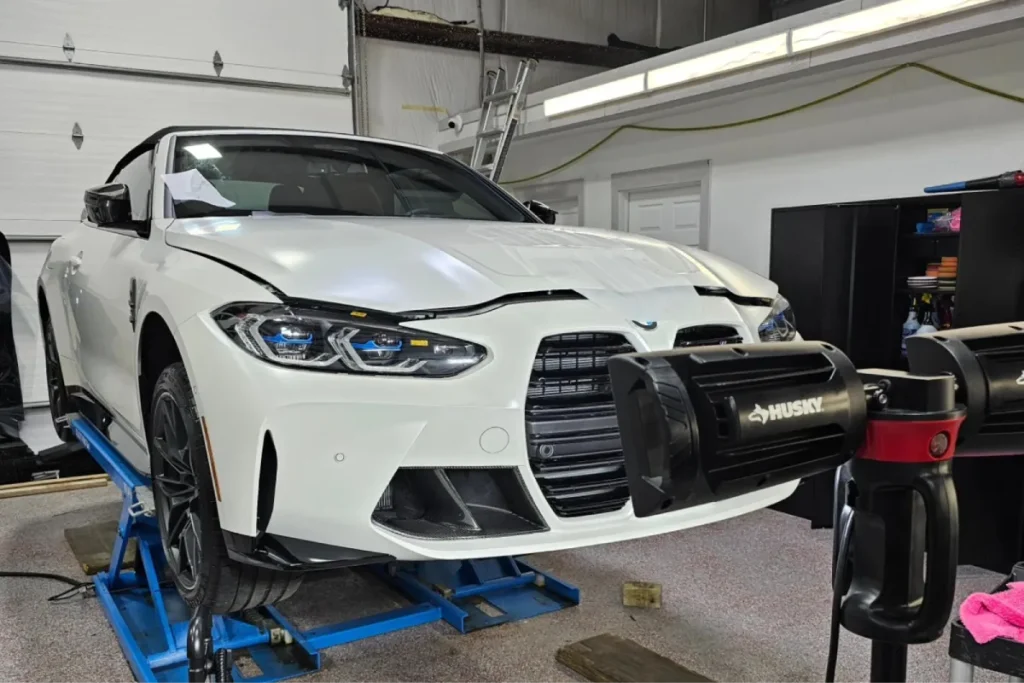
Ceramic coatings are optically clear and incredibly thin. If you apply a coating over deep scratches or swirl marks, you will simply have very shiny, well-protected scratches. To truly refresh an older car, a stage of paint correction is mandatory. This involves using machine polishers and abrasive compounds to level the clear coat and remove defects before the coating is applied. The coating’s job is to preserve the perfected finish, not to create it.
Why Experience Matters for Older Vehicles
Applying a ceramic coating in Fort Worth, TX, to a brand-new car is relatively straightforward. However, applying it to a vehicle that has been on the road for years requires a higher level of expertise.
Older vehicles often have “thin” spots in the paint or areas where the clear coat has begun to fail. A novice installer might burn through the paint or apply a coating to a surface that is already delaminating. At Technics Auto Shield, our decades of experience allow us to identify these risks and provide an honest assessment of whether your car is a good candidate for a refresh.
Give Your Vehicle a Second Youth with Technics Auto Shield
Investing in your current vehicle is often a smarter financial move than taking on a new car payment, especially when you can make your older car look nearly new again. At Technics Auto Shield, we are professional, skilled, and confident in our ability to transform your driving experience.
We want you to feel proud and excited every time you walk out to your driveway. When you choose Fort Worth ceramic coating, you are putting your vehicle in experienced hands that prioritize quality craftsmanship and world-class customer service. Whether you are looking for heat rejection, UV protection, or a long-term shine that turns heads, we have the solutions to meet your needs.
Ready to see the transformation for yourself? Contact us today or give the team at Technics Auto Shield a call to schedule your vehicle’s protection service. Experience the peace of mind that comes with 25 years of automotive protection expertise.
Frequently Asked Questions
Is my car too old for a ceramic coating?
Age is rarely the limiting factor; paint condition is. As long as your clear coat is not peeling or flaking off (delaminating), we can typically perform a paint correction and apply a coating to restore its shine.
How much does ceramic coating cost for an older car?
The cost of Fort Worth, TX, ceramic coating for older vehicles usually includes the price of paint correction. Because older cars require more labor to remove years of swirls and oxidation, the investment reflects the intensive restoration work required to prep the surface.
Does ceramic coating stop rock chips?
No. While ceramic coatings provide scratch resistance against washing and dust, they are not thick enough to stop high-speed rock chips. For that level of protection, we recommend our Paint Protection Film services.
How do I maintain the coating after it is applied?
Maintenance is simple: wash the car regularly with a pH-neutral soap using the two-bucket method. You will notice that dirt and grime wash away much faster than before.
