

A car needs paint correction when its clear coat shows visible defects such as swirl marks, haze, oxidation, or fine scratches that cannot be removed through washing, waxing, or basic polishing. These imperfections distort reflections and reduce gloss, making the paint look dull even when the vehicle is clean. If sunlight reveals spiderweb-like marks or the finish lacks depth, correction is typically required.
In most real-world cases, paint correction in Fort Worth, TX, becomes necessary when surface defects accumulate to the point where standard detailing no longer restores clarity.
Understanding What Paint Defects Actually Look Like
Most people don’t notice paint damage until it becomes obvious under direct light. The issue is that modern clear coats reflect light so well that minor imperfections remain hidden indoors.
Common visual indicators include:
- Swirl marks resembling circular spiderwebs
- Hazy or foggy reflections
- Fine scratches visible after washing
- Water spots that remain after drying
- Dull or uneven panel shine
- Oxidation on horizontal surfaces (hood, roof, trunk)
Condition Severity Table
| Defect Type | Visual Appearance | Cause | Recommended Correction |
| Light swirl marks | Fine circular patterns in sunlight | Improper washing | Light polish |
| Moderate scratches | Visible under most lighting | Brushes or drying towels | Multi-stage correction |
| Heavy oxidation | Chalky, faded surface | UV exposure | Compound + polish |
| Etching marks | Permanent spotting | Mineral deposits | Targeted correction |
What Paint Correction Actually Is (and Isn’t)
Paint correction is often misunderstood as a cosmetic “buffing” service. In reality, it is a controlled mechanical process that uses abrasives to permanently remove surface defects and level the clear coat.
It does not hide scratches. It removes them by refining the paint surface until imperfections are leveled below visible depth.
Definition List: Core Concepts
Paint Correction
A multi-stage machine polishing process that removes defects in a vehicle’s clear coat by leveling microscopic surface irregularities.
Clear Coat
The transparent protective layer is applied over automotive paint to provide gloss and UV protection.
Swirl Marks
Circular micro-scratches caused by improper washing, drying, or contact with abrasive materials.
Oxidation
A chemical breakdown of paint caused by UV exposure and environmental conditions, resulting in a dull or chalky appearance.
How Paint Damage Develops Over Time
Paint does not degrade overnight. It is the result of repeated exposure to improper maintenance techniques and environmental stress.
Everyday causes include:
- Automatic car washes with rotating brushes
- Dirty microfiber towels or sponges
- Hard water mineral deposits
- Road debris and dust abrasion
- Prolonged UV exposure
- Improper drying techniques
This type of wear is common in daily-driven vehicles and often goes unnoticed until a full sunlight inspection is performed.
For owners researching paint correction in Fort Worth, early identification of these patterns can prevent more serious clear-coat damage, which becomes more difficult to correct later.
Paint Correction vs Polishing vs Waxing
These three services are often confused, but they serve very different purposes.
| Service | Purpose | Depth of Work | Result |
| Waxing | Surface protection | No defect removal | Temporary gloss |
| Polishing | Light enhancement | Minor surface refinement | Improved appearance |
| Paint correction | Defect removal | Clear coat leveling | Permanent restoration |
Waxing protects. Polishing improves. Correction restores.
Only paint correction physically removes surface defects rather than masking them.
Misconception: “Paint Correction Is Just Buffing Scratches Out”
One of the most persistent misunderstandings in the detailing industry is that paint correction is simply buffing scratches until they disappear. This oversimplification often leads to unrealistic expectations and poor-quality work.
True correction requires:
- Measuring paint thickness before work begins
- Selecting the correct abrasive compounds and pads
- Performing multi-stage polishing
- Constant lighting inspection throughout the process
Without these steps, technicians risk removing too much clear coat or creating uneven finishes.
At Technics Auto Shield, established in 2009, family-owned and operated, with over 25 years of experience, correction work is performed with structured measurement and inspection methods designed to preserve long-term paint integrity rather than prioritize short-term visual improvement.
In areas like Tanglewood, where high-end finishes are common, improper correction techniques can permanently reduce factory paint quality if not executed with precision and restraint.
Step-by-Step Paint Correction Evaluation Process
Before any correction begins, professionals perform a detailed inspection to determine the exact condition of the paint.
1. Deep Cleaning and Decontamination
Removes bonded contaminants such as tar, iron particles, and road film.
2. Lighting-Based Inspection
High-intensity LED and halogen lighting reveal swirl marks and hidden defects.
3. Paint Thickness Measurement
Ensures there is enough clear coat available for safe correction.
4. Test Spot Evaluation
Small-area correction determines the safest combination of pad and compound.
5. Correction Planning
Each panel is assessed individually for defect severity.
Vehicles inspected in Fairmount often exhibit mixed environmental damage from tree sap exposure and seasonal debris accumulation, requiring customized correction strategies rather than uniform polishing.
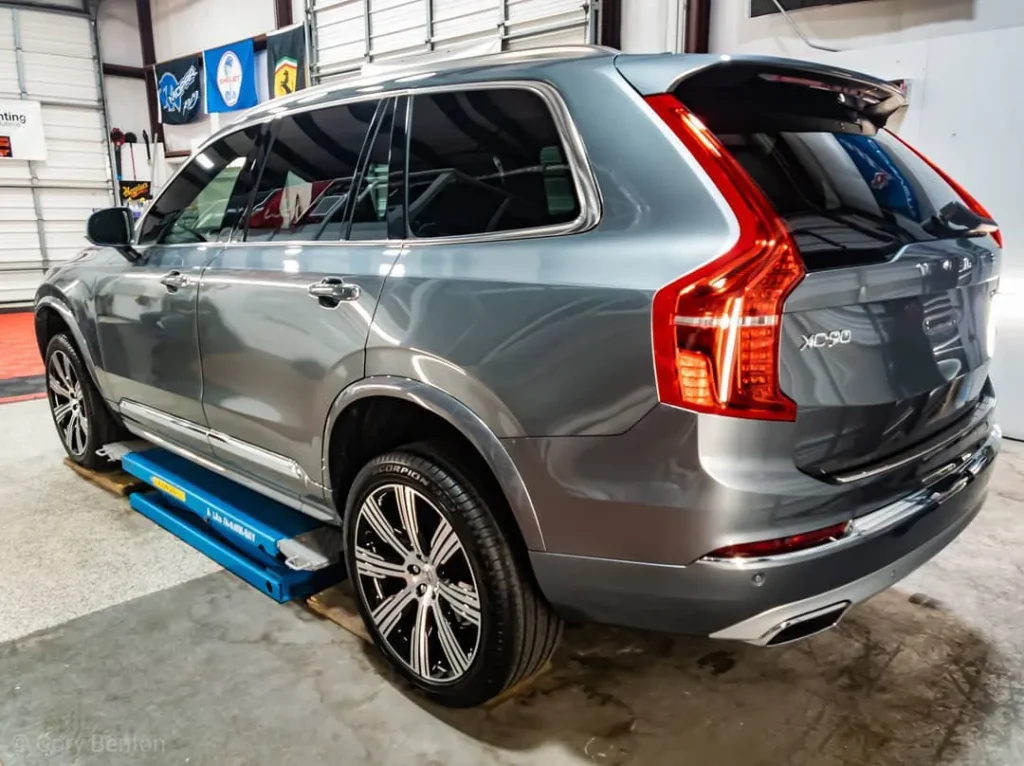
Full Paint Correction Process Explained
Once the evaluation is complete, the correction is performed in structured stages.
Stage 1: Compounding (Defect Removal)
This stage removes deeper imperfections such as oxidation, scratches, and heavy swirl marks. It is the most aggressive step in the process.
Stage 2: Polishing (Refinement)
Polishing removes haze and refines the surface left behind by compounding. This stage restores clarity and smoothness.
Stage 3: Finishing (Gloss Enhancement)
The final stage enhances the sharpness of reflection and ensures a uniform gloss across all panels.
Each stage requires precise machine control, pad selection, and product matching to avoid overworking the clear coat.
Why Experience Matters in Paint Correction
Paint correction is not a standardized service. Every vehicle has different paint hardness, thickness, and a history of previous corrections.
An inexperienced approach can:
- Remove too much clear coat
- Create uneven gloss levels
- Leave buffer trails or holograms
- Permanently damage factory paint
Experienced technicians understand how to balance correction depth with long-term durability.
In Fort Worth, TX, paint correction expertise is essential because environmental conditions, washing habits, and vehicle usage patterns vary widely among drivers.
Definition List: Paint Quality Indicators
Gloss
The intensity of light reflection from a vehicle’s surface.
Clarity
The sharpness and definition of reflections on the paint.
Haze
A fog-like appearance caused by micro-marring or improper polishing.
Defect Density
The concentration of visible imperfections across a panel.
Why New Cars Still Need Paint Correction
Many assume new vehicles are defect-free, but this is rarely true. During transport, storage, and dealership preparation, vehicles are exposed to:
- Protective film removal marks
- Machine washing before delivery
- Improper drying techniques
- Factory sanding marks (in some cases)
These imperfections often become visible only under sunlight or strong artificial lighting.
Addressing them early prevents long-term buildup of surface damage.
Misconception: Paint Correction Is Only for Neglected Vehicles
Another widespread belief is that correction is only needed for older or poorly maintained vehicles. In reality, even new or well-maintained cars can show swirl marks within weeks of ownership.
This is especially true for daily drivers exposed to automatic washes or improper drying methods.
When Paint Correction Becomes Necessary
Paint correction is typically needed when:
- Defects are visible under direct lighting
- Gloss appears uneven or dull
- Washing no longer improves appearance
- Surface reflections appear distorted
At this stage, surface-level detailing is no longer effective, and mechanical correction becomes the only viable solution.
For drivers considering Fort Worth paint correction, timing is critical because deeper defects require more aggressive correction techniques.
In Summary: Restoring Clarity the Right Way
Paint defects are unavoidable over time, but they do not have to be permanent. When swirl marks, haze, or oxidation begin affecting your vehicle’s appearance, professional correction restores clarity and gloss at a structural level rather than a cosmetic one.
For reliable paint correction, Technics Auto Shield delivers precision-based correction built on measurement, controlled polishing, and long-term paint preservation.
To protect your finish and restore showroom clarity, the next step is simple.
Contact us today to schedule a professional inspection and determine the exact level of correction your vehicle needs.
FAQ: People Also Ask
What are the first signs my car needs paint correction?
Swirl marks, dull reflections, and visible scratches in sunlight are early indicators.
Can paint correction remove all scratches?
It removes defects within the clear coat but not scratches that reach the base paint layer.
How long does paint correction last?
The results are permanent unless new surface damage occurs.
Is paint correction safe for all vehicles?
Yes, when performed with proper measurement and controlled polishing techniques.
Does paint correction increase resale value?
Yes, improved appearance and gloss can positively influence buyer perception.
